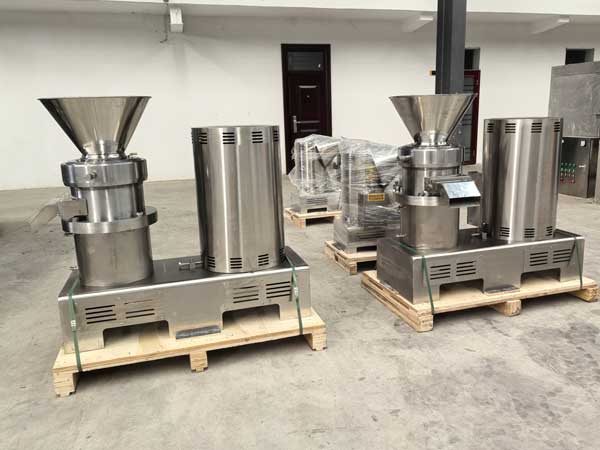
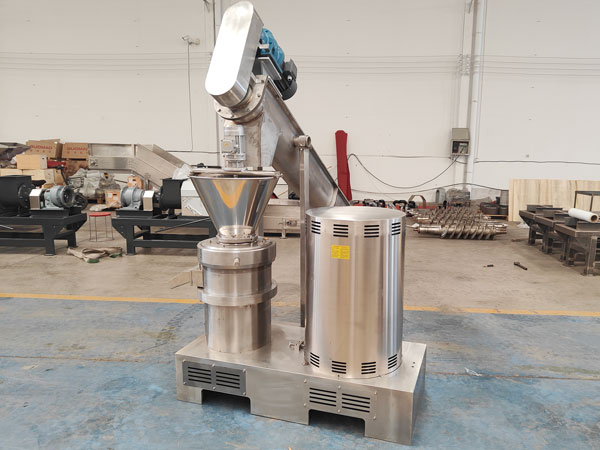
Choosing the right colloid mill is not just about price or capacity. It’s about performance, reliability, and how smoothly the machine fits into your production line. At Fuxun Machinery, we manufacture and supply three main structural types of colloid mills:
Horizontal colloid mills
Vertical colloid mills
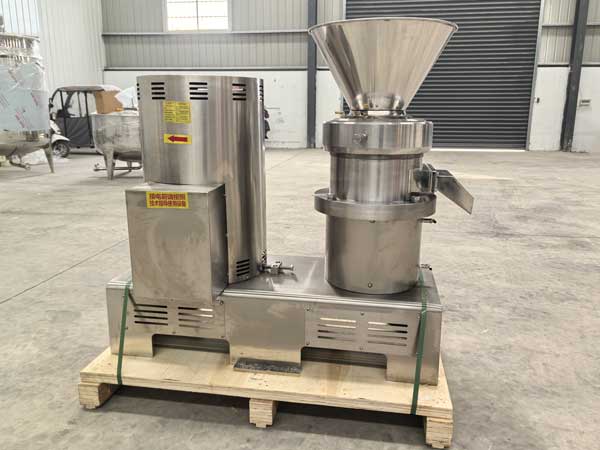
Split-type colloid mills (most widely used configuration)
While all share the same core grinding principle, each serves a different type of production environment. This guide breaks down how they work, their key differences, and how to select the right one for your materials and process.
What All Colloid Mills Have in Common?
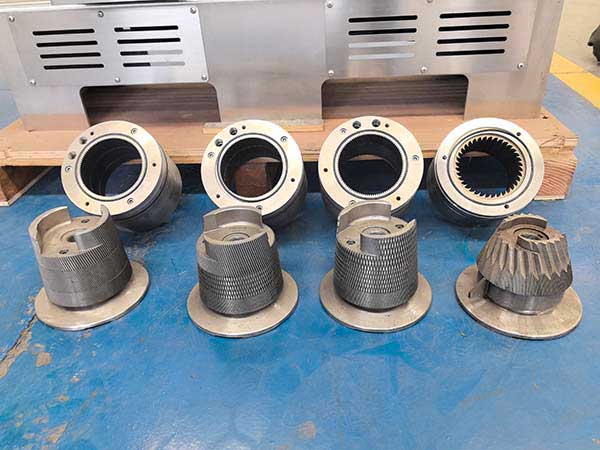
Regardless of structure, all colloid mills are based on the same working principle. A colloid mill uses a pair of precision-machined grinding elements:
Rotor (moving teeth)
Stator (fixed teeth)
As material passes through the adjustable gap between the rotor and stator, it is subjected to high shear force, friction and compression, and high-frequency vibration. This makes colloid mills ideal for wet grinding, emulsification, dispersion, and homogenization. Applications include peanut butter, sesame paste, chili sauce, cosmetic creams, and chemical slurries.
Regardless of type, all mills consist of a stainless steel housing, rotor-stator grinding system, gap adjustment mechanism, bearings, seals, and a drive system. The real difference lies in how the motor is arranged, how power is transmitted, and how easily each model fits into your production setup.
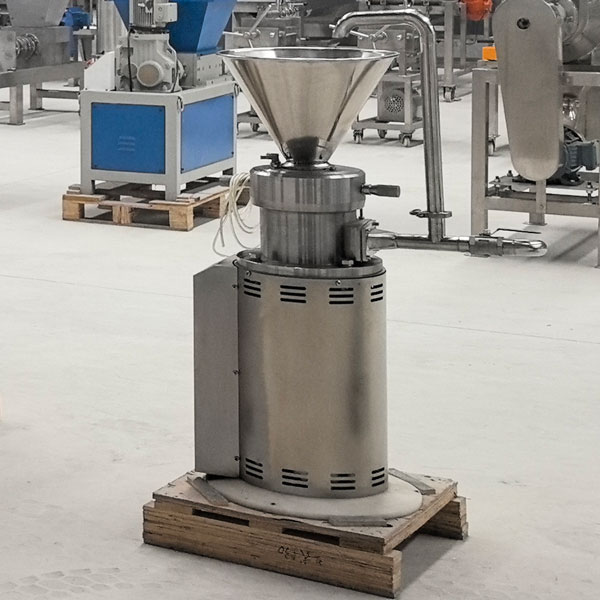
Vertical Colloid Mill – Compact and Economical
A vertical colloid mill integrates the motor and grinding head on the same axis. The motor directly drives the rotor, resulting in a compact, space-saving design that’s easy to install and operate.
Best for:
Small workshops and pilot plants
Low- to medium-viscosity materials
Intermittent or small‑batch production
If you’re producing items such as fruit puree, light sauces, or dairy emulsions and need a low-cost, energy-efficient machine, a vertical colloid mill is a practical choice.
Heat transfer between the motor and grinding chamber may cause motor overheating
Hopper positioned above the motor — any leakage can affect motor performance and shorten service life
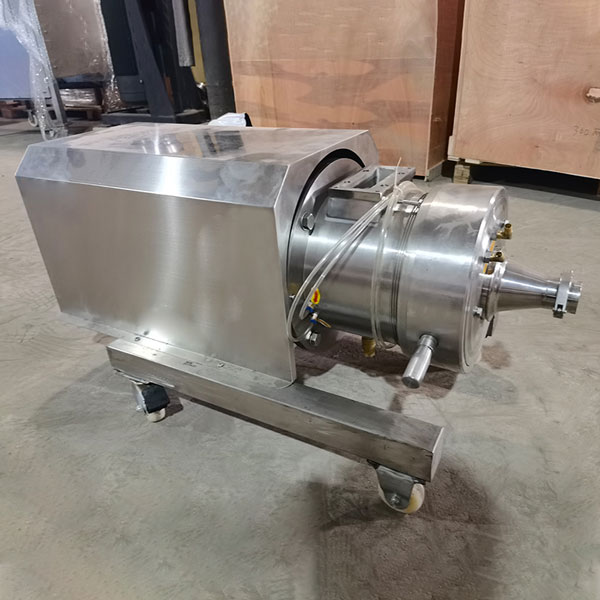
Horizontal Colloid Mill
A horizontal colloid mill has a shaft arranged horizontally, with inlet and outlet ports typically on the same level. Similar to other structures, the rotor and stator rotate at high speed to deliver strong shear, friction, and turbulence, effectively dispersing, emulsifying, and homogenizing the material.
Best for:
Low- to medium-viscosity materials with good flow properties
Continuous inline or circulation systems
Advantages:
Convenient pipeline integration for continuous processing
Smooth feeding and discharge for liquids and thin emulsions
Compact lengthwise design, suitable for production lines with limited height
Limitations:
Direct-coupled structure may result in faster bearing wear and potential shaft misalignment
Difficult internal maintenance — requires professional technicians when replacing parts
Split-Type Colloid Mill — Most Popular
The split-type colloid mill is the most common structure in industrial production — and Fuxun’s flagship model. Here, the motor and grinding head are separate, linked by a belt and transmission system.
Technical benefits:
Lower vibration and heat transmission from motor to the grinding head
Reduced risk of motor damage from material leakage
Easy belt replacement and longer motor life, even under extended use
Limitations
Slightly larger footprint than integrated models
Higher initial cost than basic vertical integrated mills
Requires basic belt tension inspection during routine maintenance
Best for:
High-viscosity pastes and high-solid materials
Continuous, heavy-duty industrial operations
How to Choose the Right Colloid Grinder?
When choosing, also consider:
1. Material Characteristics – Match by viscosity and flow characteristics.
Good flowability → Horizontal
High viscosity or thick pastes → Split-type
Small batches, light materials → Vertical Integrated
2. Production Mode
Continuous industrial line → Split-type or horizontal colloid grinder
Intermittent or small-scale → Vertical grinder.
3. Maintenance and Stability
Minimal maintenance, light-duty → Vertical
Long-term heavy-duty → Split-type
Conclusion
Choosing the right colloid mill ultimately comes down to aligning your process needs with the machine’s design advantages. At Fuxun Machinery, we engineer each colloid mill for precision, reliability, and consistent results—helping you achieve finer emulsions, smoother pastes, and more efficient operations. If you’re unsure which type fits your production setup best, our experts are here to advise and tailor a solution to your materials and workflow. Contact us today to find the ideal colloid grinder for your processing line.