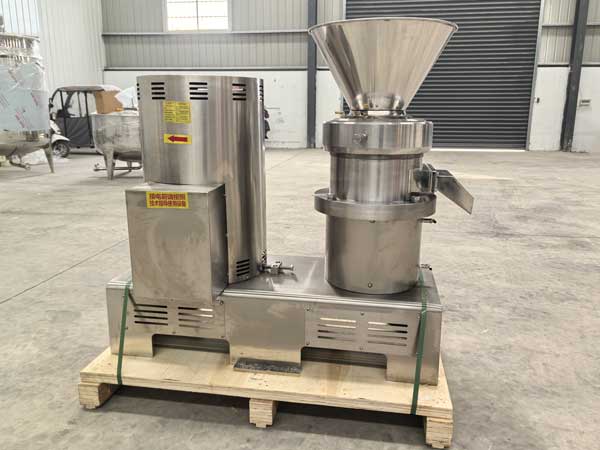
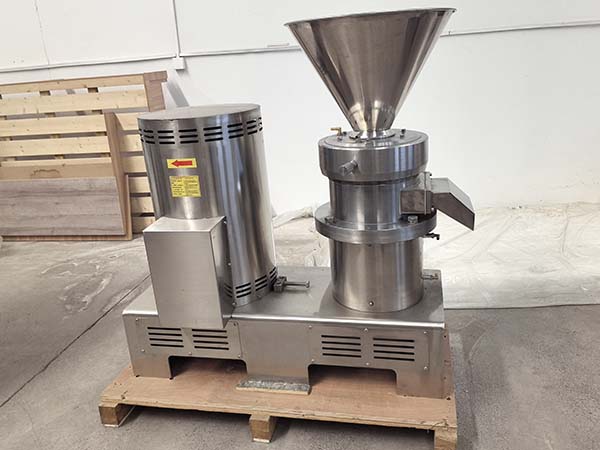
At Fuxun Machinery, our peanut butter is a high-shear colloid grinder designed for nut paste processing. It is widely used for making peanut butter, almond butter, sesame paste, and other high-oil nut products.
In this guide, we explain how a peanut butter machine works, introduce its main parts and what each does, and provide a detailed use, cleaning, and maintenance guide. This will help you achieve consistent peanut butter quality while extending machine service life.
How Does a Peanut Butter Machine Work?
Our peanut butter machine, colloidal grinder, works by high-speed shear, grinding, and emulsification between a rotating rotor and a fixed stator.
1. Key Components
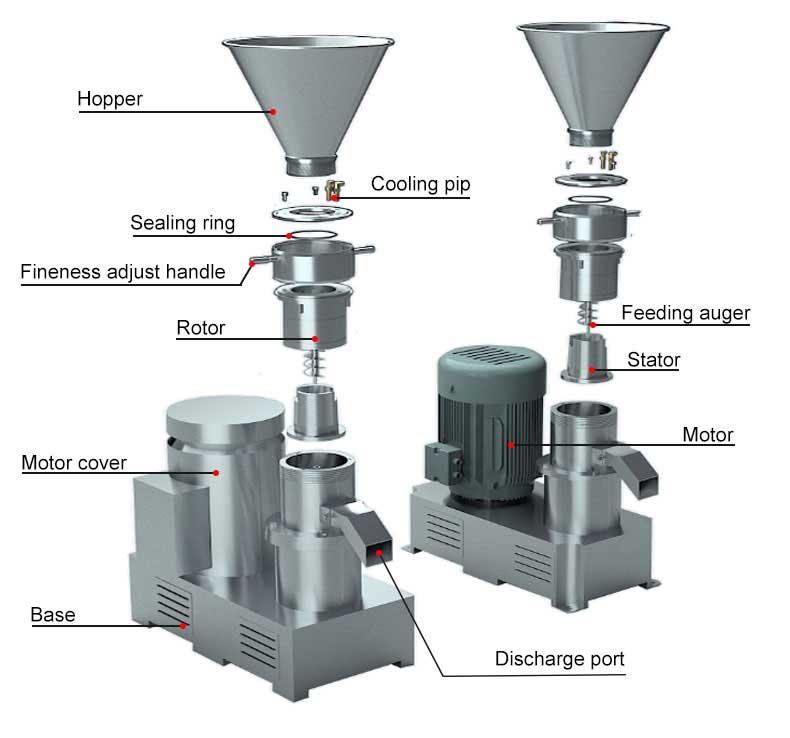
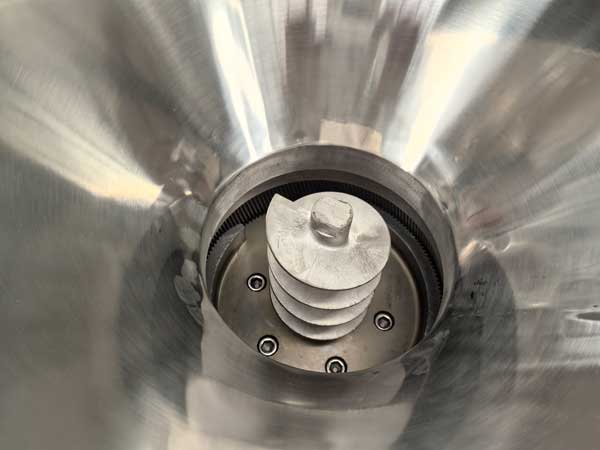
The core of our peanut butter grinder is
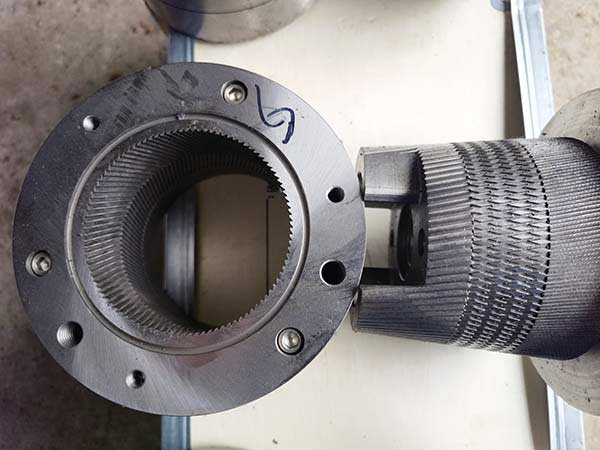
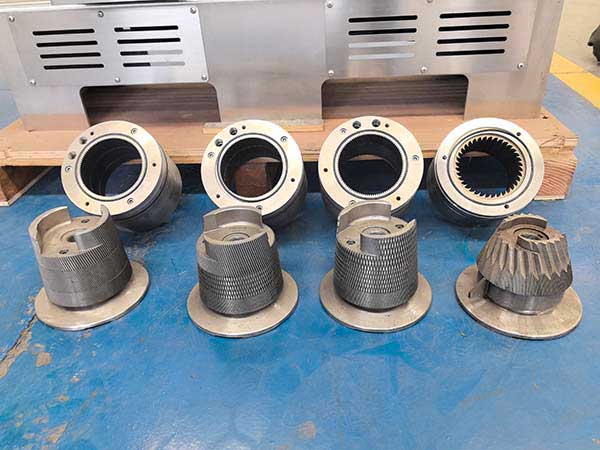
Stator (Stationary Disc): This is a fixed, cone-shaped component with very finely machined teeth on its surface. For peanut butter, composite teeth are commonly used, combining:
Shear-type teeth for initial crushing
Diamond-shaped teeth for fine and ultra-fine grinding
Rotor (Rotating Disc): A matching cone-shaped disc driven by a powerful motor and rotating at high speeds.
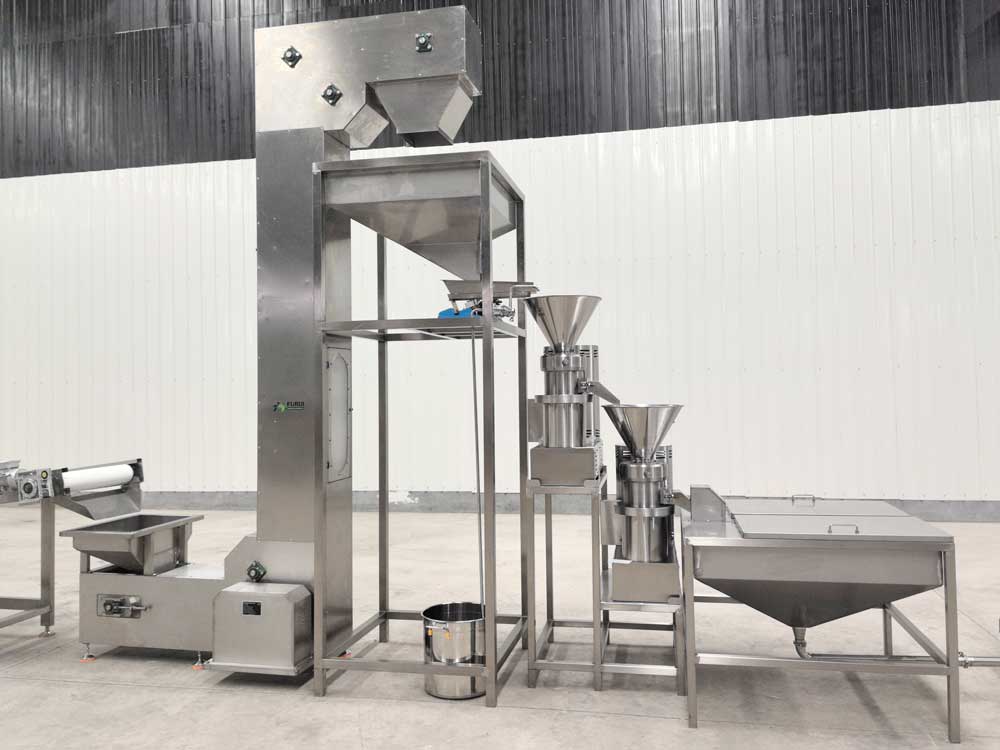
Hopper: Holds roasted peanuts or pre-crushed material and ensures continuous feeding.
Feeding Auger: Actively pulls material from the hopper and pushes it steadily into the grinding chamber.
Motor & Transmission System: Provides stable, high-speed rotation required for fine grinding.
Motor Cover: Protect the motor from dust, moisture, and food particles.
Adjustment Handle: Adjusts the gap between the rotor and stator to control the paste fineness.
Seal System: Prevents product leakage and protects bearings.
Discharge Outlet: Where the finished peanut butter flows out.
2. Peanut Butter Grinding Process
1. Peanut Feeding
Roasted peanuts enter the hopper and are fed into the grinding chamber by gravity and the feeding screw.
2. Grinding With Rotor and Stator
Inside the grinding chamber, a rotor spins at high speed against a fixed stator. As peanuts pass through the narrow gap between rotor and stator, they are subjected to shearing, grinding, and high-frequency vibration. The grinder chamber is divided into three stages — coarse, fine, and ultra-fine — so the peanuts are gradually reduced to the desired fineness. During this process, solid and oil become fully dispersed, creating a uniform and stable peanut butter.
3. Discharge
The finished peanut butter flows out from the outlet, ready for further processing.
How to Use a Peanut Butter Machine?
Follow this practical operation guide from Fuxun Machinery to ensure safe operation and stable product quality.
1. Before Starting
Make sure all fastening bolts are tightened properly.
Turn the two fixed rods counterclockwise to loosen the lock.
Rotate the adjustment ring counterclockwise by at least 90° to fully open the grinding gap.
Check the rotation direction. The rotor should rotate clockwise when viewed from the inlet.
Connect the inlet and outlet cooling water pipes. A φ10 mm plastic hose is recommended.
2. Starting the Machine
Turn on cooling water (0.15 MPa, ≤25°C) before operation.
Start the motor, and let the machine run smoothly.
Do NOT feed peanuts until the machine is running normally.
Adjust grinding fineness gradually according to desired texture and capacity.
3. Feeding and Processing
The peanut butter machine is designed to only process wet or oily material — no dry solids.
Feed size should be less than 40 mm to protect rotor and stator.
Remove metal, stones, or other hard impurities before feeding to avoid damage.
4. Cleaning After Use
Clean the grinding chamber immediately after each use.
Rotate the adjustment ring counterclockwise by at least 90° to open the grinding gap.
Add clean water and let the machine run for internal flushing.
For oily materials, use warm water or food-grade detergent.
Rinse thoroughly until no residue remains.
5. Routine Maintenance
Inspect rotor and stator wear regularly.
Check mechanical seal for leakage.
Ensure cooling water flows normally.
Verify the grinding fineness and adjust the gap if needed.
Stop immediately if abnormal noise or vibration occurs.
Common Mistakes When Using Peanut Butter Machine
Avoid these common issues to prevent damage and quality problems:
1. Feeding material before the machine runs smoothly. This can overload the motor and cause uneven grinding.
2. Feeding dry materials or large particles may cause poor grinding results or even damage the rotor and stator.
3. Running the machine in the wrong rotation direction can loosen the rotor bolt and cause serious damage.
4. Skipping Regular Cleaning: Residual peanut paste left inside the grinding chamber can harden, affect taste, and shorten seal life.
Conclusion
Understanding how a peanut butter machine works and how to operate it correctly — is essential for producing smooth, consistent nut butter while lowering operating costs. At Fuxun Machinery, we supply colloid grinders for peanut butter and nut paste processing. We also offer equipment and solutions from roasting to packaging. If you are looking for a peanut butter grinder, our team is ready to help. Please feel free to contact us!