Description
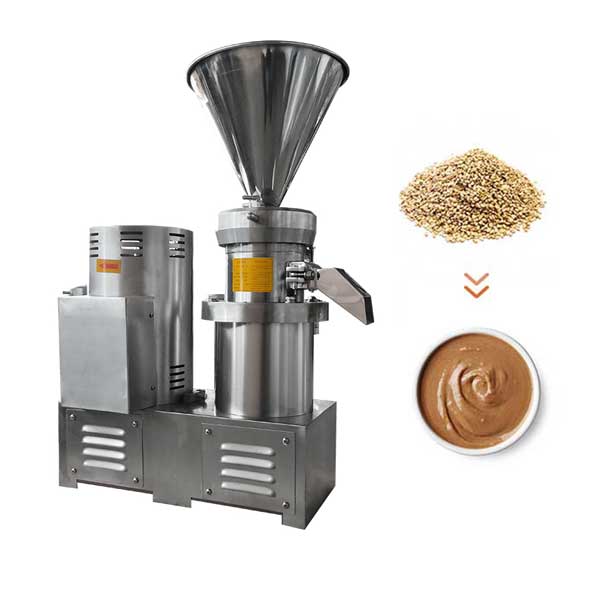
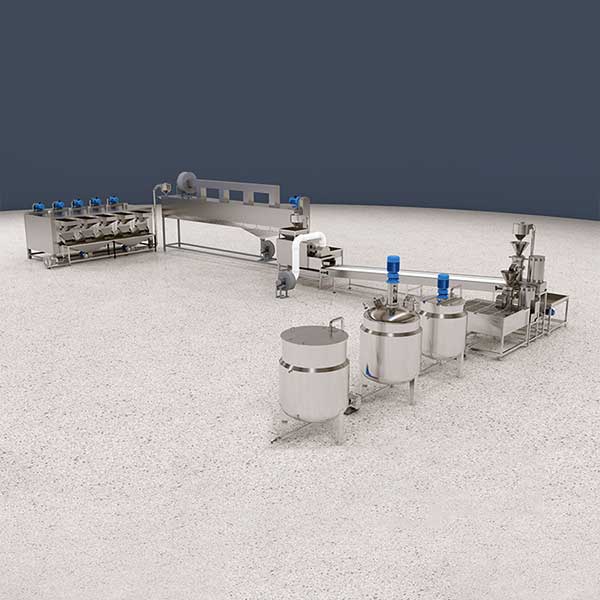
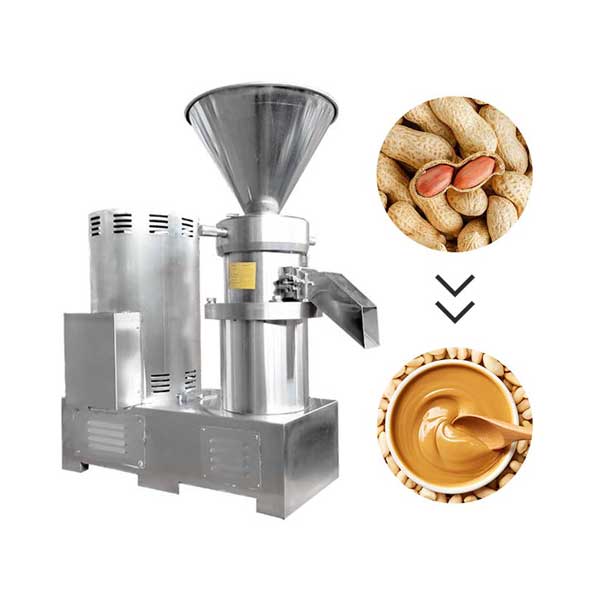
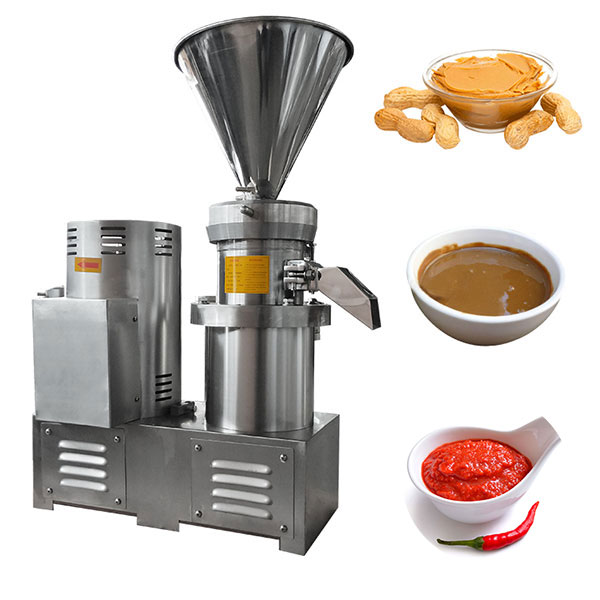
Colloid mill machine is a high-shear wet-grinding machine designed for the fine processing of fluid and semi-fluid materials. It integrates the functions of multiple machines — such as a homogenizer, grinding mill, shear mixer, and agitator—into one efficient system. Through high-speed shearing, grinding, dispersing, emulsifying, and homogenizing, the machine reduces particle sizes to 2-50 microns with a homogeneity level of over 90%. Fusion Machinery offers 9 models of colloid grinders for sale, which are widely used in pharmaceuticals, food, chemicals, cosmetics, and other industries.
Main Function of Colloid Grinder
- Fine grinding (particle size reduction)
- Emulsifying (blends oil and water phases into stable emulsions)
- Dispersing (breaks down and disperses solids, powders, or fibers into liquids, resulting in uniform mixtures)
- Homogenizing (uniformly distributes particles, preventing separation)
Colloid Mill Uses
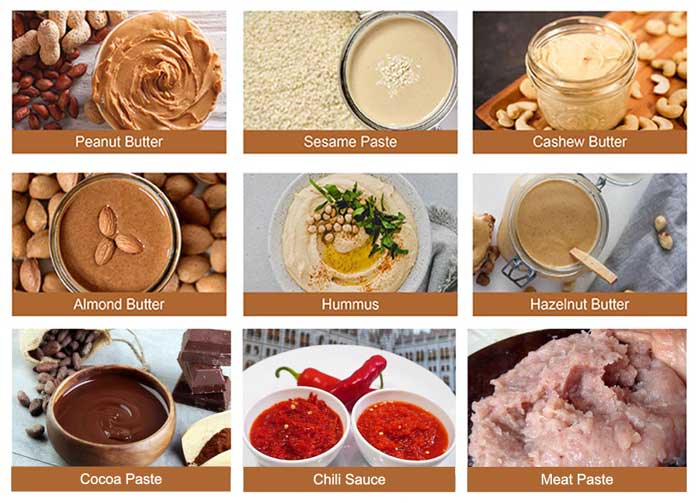
- Food Industry: Peanut butter, almond butter, tahini, chili sauce, garlic paste, meat paste, cocoa liquor, fruit purees, soybean milk, and more.
- Pharmaceutical Industry: Used for processing ointments and creams, suspensions and syrups, etc.
- Cosmetics Industry: Used for manufacturing skin creams and lotions, gels, serums, emulsions, and more.
- Chemical Industry: Processing lubricants and grease, paints, bitumen emulsions, adhesives, detergents, and surfactant solutions.
Specifications of Colloid Grinder
| Model | JMS-50 | JMS-80 | JMS-110 | JMS-130 | JMS-160 | JMS-180 | JMS-210 | JMS-240 | JMS-300 |
|---|---|---|---|---|---|---|---|---|---|
| Fineness (mesh) | 50-100 | 80-150 | 80-150 | 80-200 | 80-200 | 80-200 | 80-200 | 80-200 | 80-200 |
| Capacity (kg/h) | 10-20 | 60-80 | 100-200 | 300-500 | 500-600 | 700-800 | 1000-1200 | 1200-1500 | 3000-4000 |
| Power (kW) | 1.5 (220V) | 4 | 7.5 | 11 | 15 | 18.5 | 30 | 45 | 75 |
| Weight (kg) | 50 | 150 | 175 | 285 | 300 | 375 | 700 | 920 | 1300 |
| Dimensions (mm) | 530*260*580 | 600*410*930 | 700*430*1000 | 990*440*1000 | 1000*460*1050 | 1000*490*1100 | 1260*600*1230 | 1330*630*1280 | 1440*680*1420 |
| Hopper (L) | 3 | 8 | 8 | 14 | 14 | 14 | 24 | 24 | 32 |
| Feed Inlet Diameter (mm) | 40 | 50 | 50 | 90 | 90 | 90 | 120 | 120 | 270 |
Types of Colloid Machine
Based on design, Fuxun Machinery offers 3 types of colloid grinders to meet different industry demands.
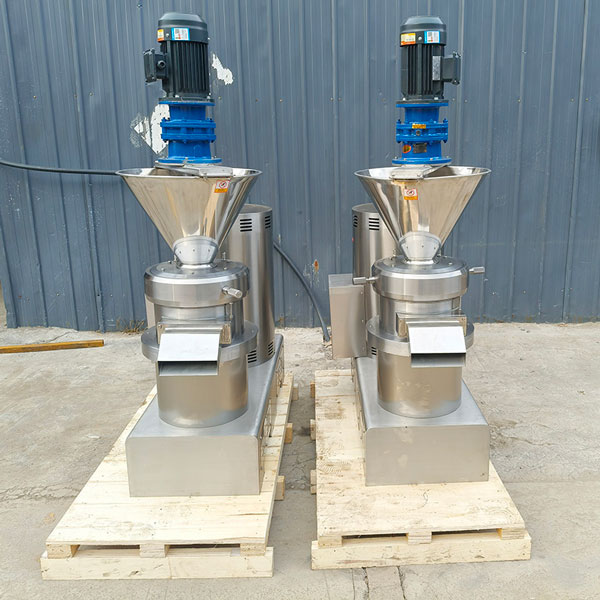
1. Vertical Colloid Grinder
Ideal for: Small-scale production, laboratory use, or applications requiring compact design.
Key Features:
- Compact and space-saving design makes it ideal for small businesses and research labs.
- High-efficiency milling due to the belt-driven rotor that increases speed by 3-5 times compared to direct-drive models, making it highly effective for grinding.
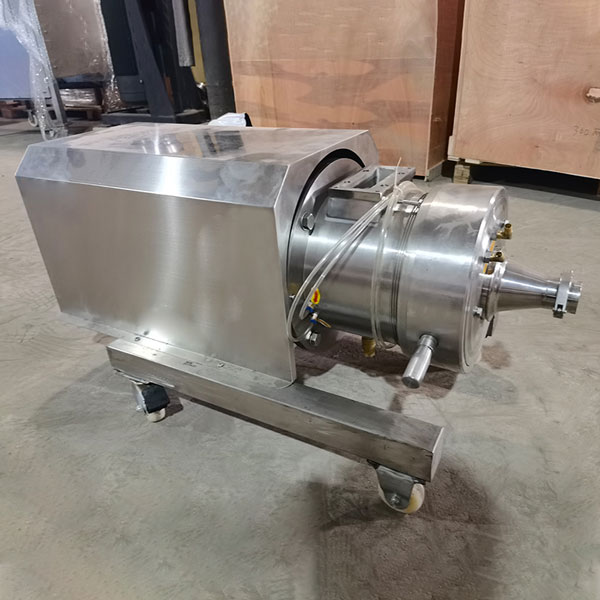
2. Horizontal Colloid Grinder
Ideal for: Large-scale, continuous production in the food, chemical, and pharmaceutical industries.
Key Features:
- Continuous flow processing, which makes it ideal for large production volumes.
- Direct connection motor for powerful grinding and emulsifying action, which is efficient for high-viscosity and high-volume processing.
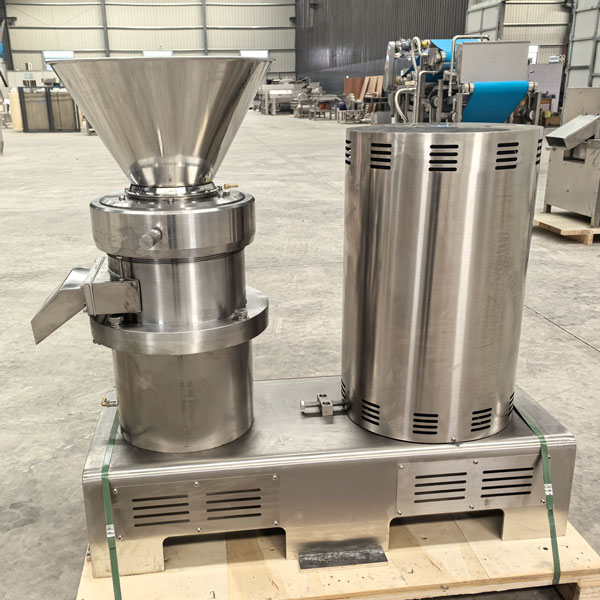
3. Split-Type Colloid Grinder
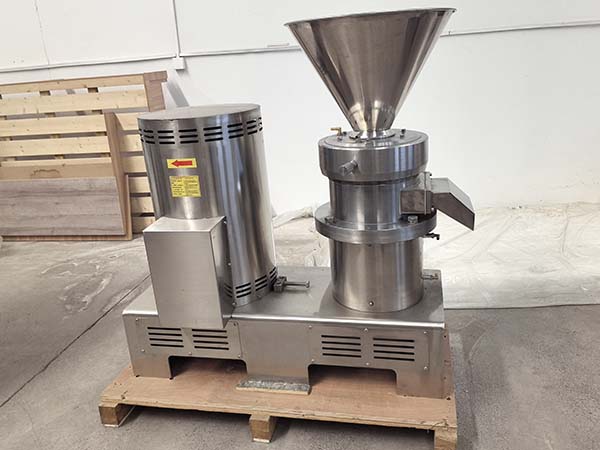
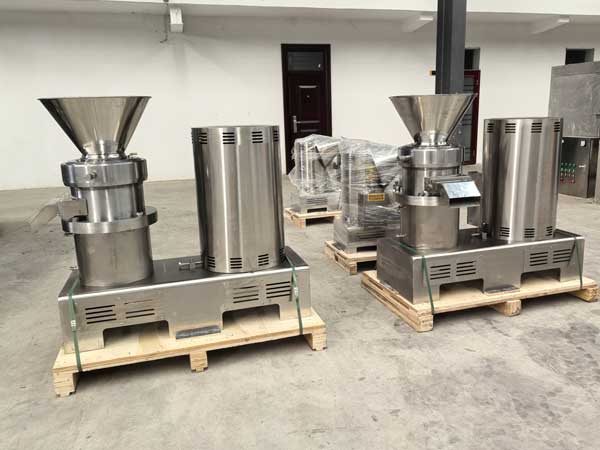
It is the most common type we offer. The motor and grinding chamber are separated, making this design more stable and easier to maintain.
Key Features:
- Separation of motor and grinding unit ensures that material leakage does not damage the motor, extending motor life.
- Highly stable performance with low chances of mechanical failure.
Additional Options:
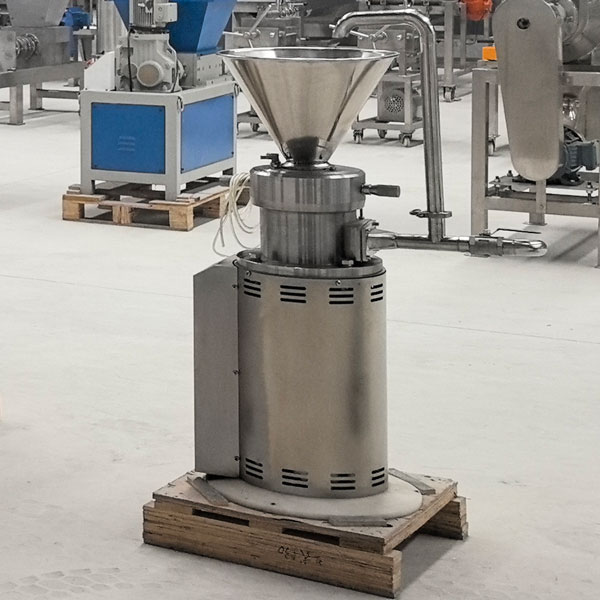
- Circulating Pipe Model: Designed for grinding liquid or low-viscosity materials, this model features a circulation process to improve efficiency and fineness.
- Square Outlet Model: Best suited for medium- to high-viscosity materials like peanut butter and chili sauces that don’t require recirculation, offering a highly efficient grinding solution.
Components of Colloid Machine
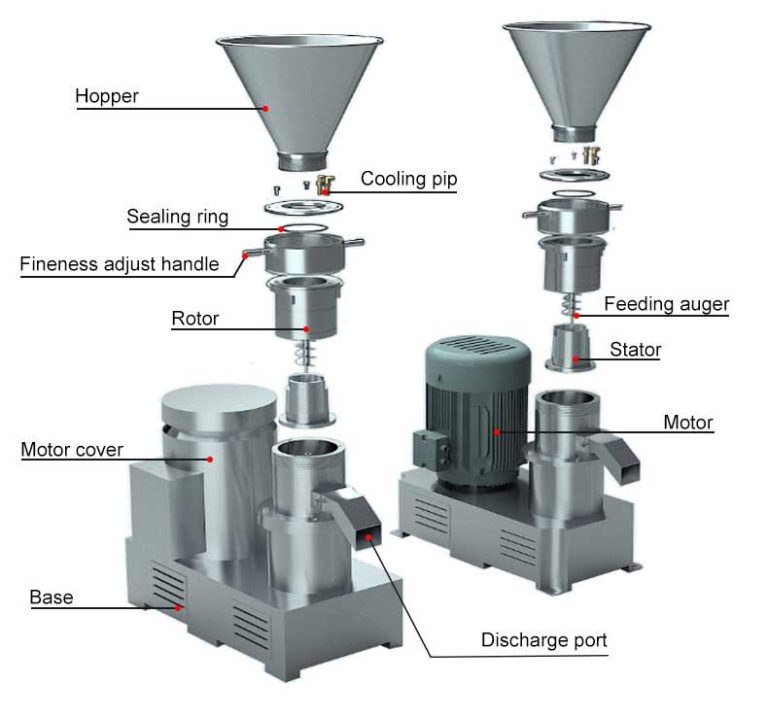
| Component | Role and Function |
| Feeding System | The feeding system ensures that material enters the grinding chamber smoothly. · Feed pump can be used for high-viscosity materials, ensuring a constant and uniform feed. · Screw feeder is ideal for applications that require steady feeding of materials to improve the automation level. |
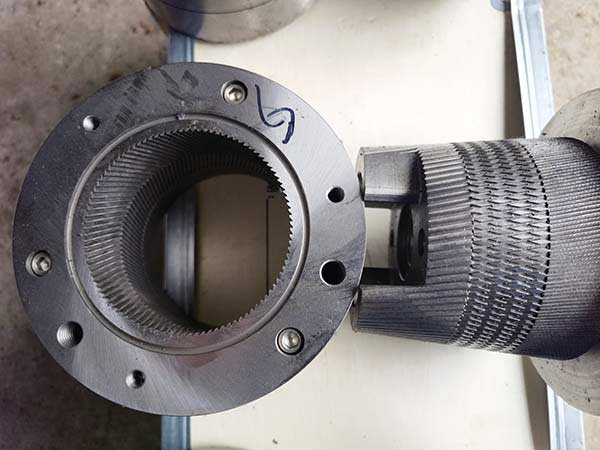
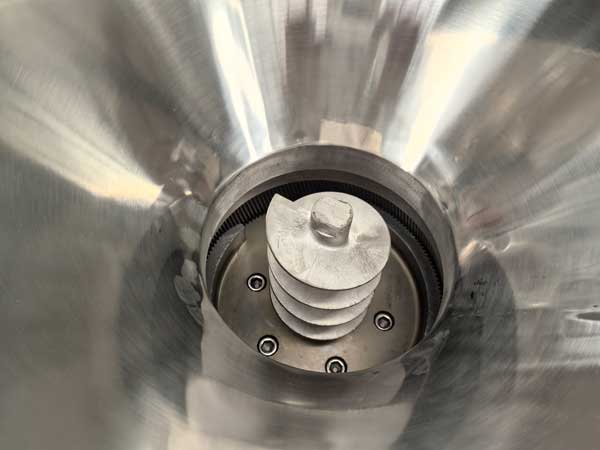
| Stator and Rotor | Core grinding components. The rotor rotates at high speed, and the stator remains stationary. The material passes through the small gap between the rotor and stator, where it’s subjected to intense shear, centrifugal, and frictional forces that reduce the particle size. The gap between the rotor and stator is adjustable, allowing for control over the fineness of the material being processed. |
| Motor and Drive System | The motor powers the colloid mill, connected to the rotor via a belt drive. |
| Cooling System | High-speed grinding generates heat, which can damage sensitive materials. The cooling system helps maintain a consistent temperature during the grinding process, preventing overheating. |
| Discharge Port | After processing, the final product exits through the discharge port, usually at the side of the mill. |
| Sealing System | Seals are crucial to prevent leakage of material during processing. A reliable sealing system ensures that the material stays inside the grinding chamber and prevents contamination. |
How Does a Colloid Mill Work?
The working principle of a colloid mill is based on the high-speed relative motion between the rotor and stator. Here’s how it works:
Feeding the Material: The material enters the mill through the feeding system.
Grinding Process: The motor drives the rotor, which rotates at high speed, while the stator remains fixed. When material enters the grinding chamber, it is subjected to strong shear, friction, and centrifugal forces. These forces effectively break the material into finer particles.
Discharging: Once the material has been fully processed, it is expelled through the discharge port, and the finely ground product is ready for use or further processing.
Colloid Mill vs. Ball Mill vs. Stone Mill
| Items | Colloid Mill | Ball Mill | Stone Mill |
| Core Principle | High Shear & Emulsification: High-speed rotor and stator generate intense shearing, friction, and centrifugal force. | Impact & Attrition: Grinding balls inside a rotating drum crush and grind the material upon falling. | Low-Speed Grinding: Material is processed between two abrasive stones with grooves, relying on slow pressure. |
| Material State | Wet Processing: Fluids, semi-fluids, emulsions, and pastes. | Dry or Wet: Primarily hard, dry materials, also used for heavy slurries. | Dry or Wet: Grains, beans, or oilseeds. |
| Operational Speed | Extremely High (e.g., 2000–3000+ RPM). | Low Tumbling Speed. | Very Low Speed (e.g., 20–30 RPM). |
| Heat Impact | High Heat Generation due to intense friction. | High Heat Generation due to impact and friction. | Low Heat Processing (often called “cold grinding”). |
| Typical use | Pastes, emulsions, creams | Fine Powders | Flour or Artisanal Paste (texture often coarser than colloid mill). |
Why Use Fuxun’s Colloid Mill?
The colloid grinder is a hot-selling product of Fuxun Machinery. From adjustable rotor–stator gaps to durable food-grade stainless steel parts, every detail is built to deliver steady performance. Whether you’re producing nut butter, chili sauce, cosmetics, or pharmaceutical creams, our machines are engineered to run smoothly. With 9 models and multiple configurations available, we help customers choose the right machine instead of the most expensive one. That’s why hundreds of clients choose Fuxun’s colloid grinders each year. Contact us for a quote or to discuss your material — we’ll recommend the most suitable model for your production needs.